FIRE
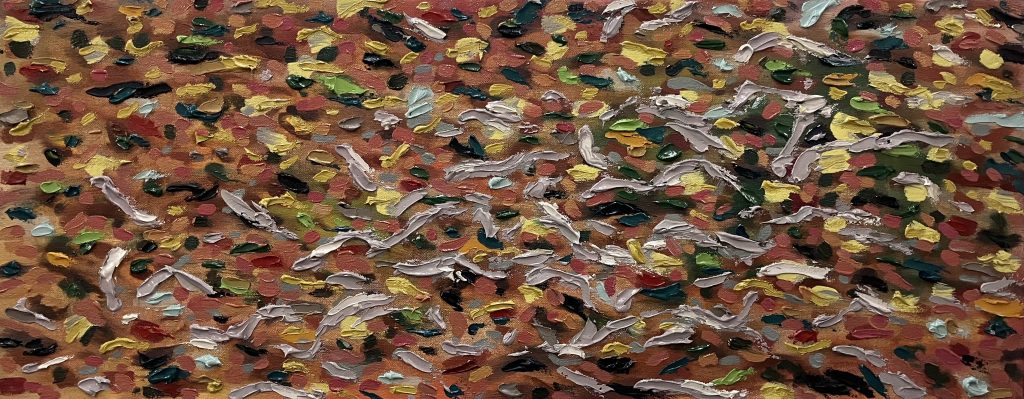
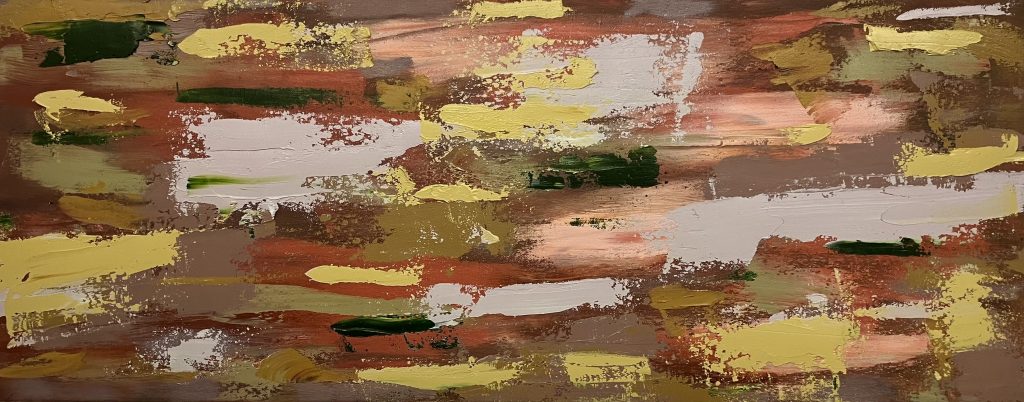
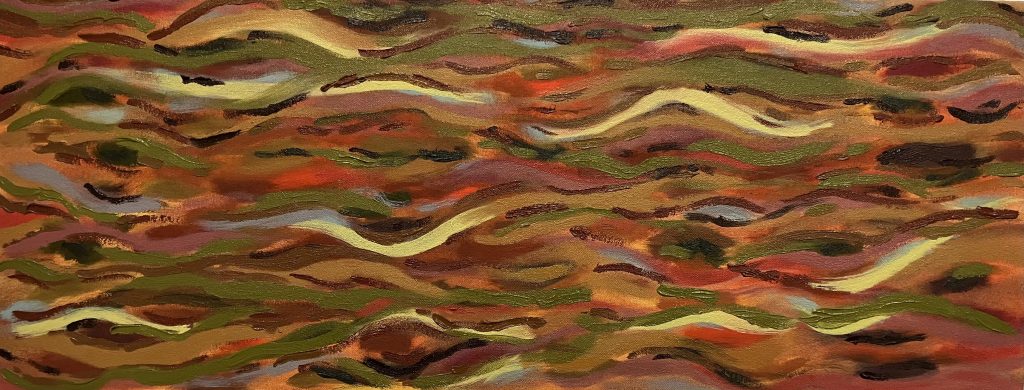
This series of three abstract oil paintings was produced in the Fall of 2024. Each of the paintings reflects a different aspect of the same bush in a burn zone from the 2024 summer Alexander Mountain Fire along US-34 in Colorado. The paintings make a triptych, calling to mind the three crucial elements of fire starting (heat, oxygen, & fuel) and, consequently, the basic principles of fire management. The paintings capture the bush’s color, shape, and movement, and are titled respectively.
More than composition, however, this body of work is a treatise on fire ecologies and the politics of burn zones. When I set out to produce these paintings, I began with a less-than-novice concept of fire ecology. With portable easel, canvas, and paint in tow, I drove along US-34 in the fall of 2024 searching for evidence of the summer’s fire. This same fire, which forced nearby friends out of their homes, threatened to incapacitate my active, asthmatic partner, and demanded out-of-state aid to subdue, was man-made. At the time, I considered it a climate catastrophe and mourned the loss of wildlands our greater-than-human neighbors would again suffer. However, a few weeks later, while driving up US-34, I didn’t see anything I would now describe as a catastrophe. This, too, was a point of contention for me; I am aware that what sits above the surface is so often different than what lies below, especially to my untrained eye. What I saw as I drove along the Big Thompson River canyon walls was fall colors, rocks that seemed, in that slant of light, perfectly well-adjusted if a bit bare, ponderosas growing in the cracks between boulders, all scarred only on close examination. Only when I pulled into a turn-out did I see scorch marks. There, I settled down next to a scarred bush shedding its fall leaves on a shale hillside and painted what I felt.
I have no intention, background, or desire to comment on the ethics of fire management. I can only identify the tensions between the simple facts that someone irresponsible started this fire, and that fire, in spite of its beginnings, may have carried some positive impact, and the resources (and people) needed to contain man-made fires are unsustainable, and we need those resources available to prevent the loss of homes and livelihoods, and our colonizing and imperializing of wild habitats for urban spaces is to blame for the exact conditions which produce forest fires in the first place.
Forest fires, to me, feel a bit like snakes eating their own tails. And a tryptych felt like the most apt container to hold the tensions I faced while painting a single bush in a burn zone on US-34. What these paintings communicate is life, existing in spite of, on the roadside, and intent on creating. In an attempt to capture the context, I used the fall colors, scraggly shapes, smells, and breezes around me to direct my work. While only the first of this tryptych was made en plein air, the latter two hold the immediacy at plein air’s heart.